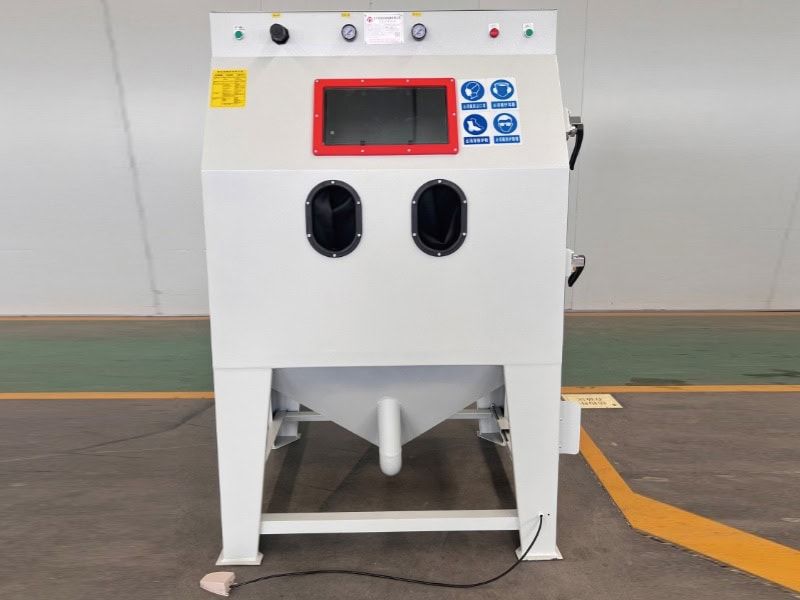
Standard Suction Sandblasting Cabinet
Industry-proven compact design requiring no foundation. Features advanced cyclone separation to maximize abrasive recycling and lower daily operating costs.

Compare suction, pressure and specialty blast cabinets. Find the right model for rust removal, deburring, mold cleaning and precision surface finishing.
Entry-level and cost-effective blasting solution that uses compressed air to draw abrasive into the gun. Requires lower air compressor capacity, easy to operate and maintain. Ideal for small to medium batch production, mold maintenance and precision part finishing.
Industry-proven compact design requiring no foundation. Features advanced cyclone separation to maximize abrasive recycling and lower daily operating costs.
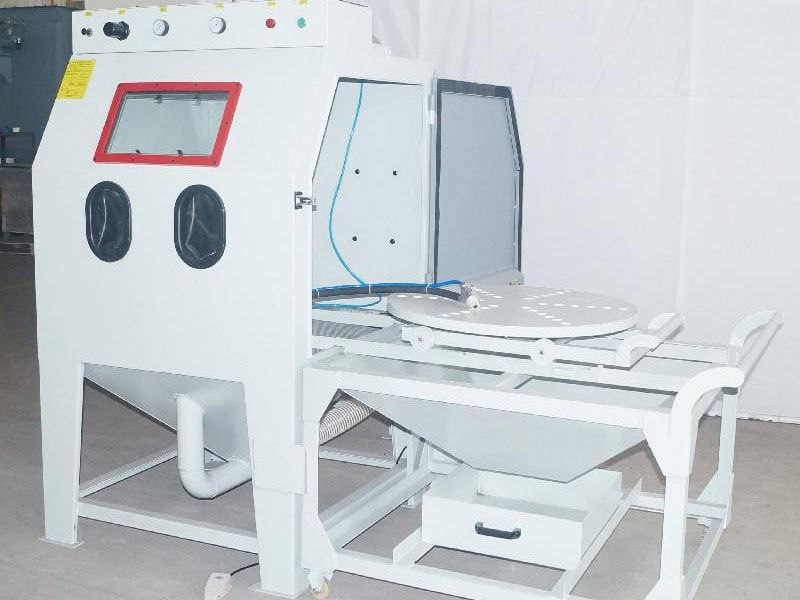
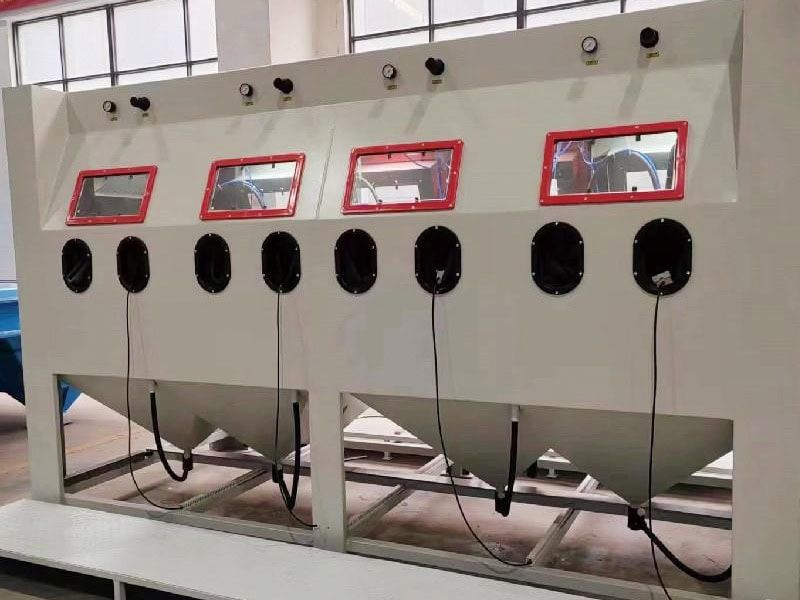
Extended multi-station suction design. Enables two to three operators to simultaneously process long or large-scale components, maximizing workshop throughput.
High-performance pressurized blasting system that delivers stronger impact and faster cleaning speed. Requires higher CFM air supply, designed for aggressive rust removal, heavy scale stripping and thick coating removal on large workpieces.
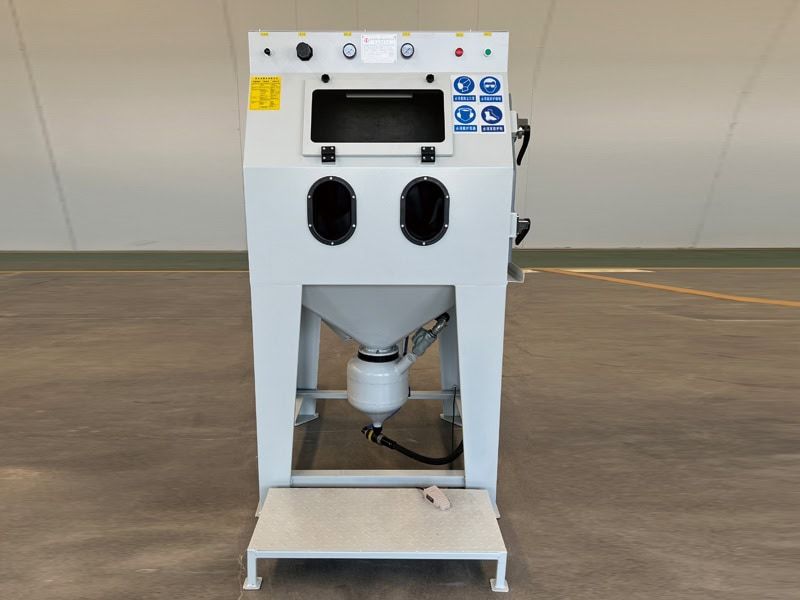
High-efficiency pressurized abrasive blaster system delivering fast, deep-impact blasting. Features advanced low-maintenance valve technology and integrated eco-friendly dust extraction.
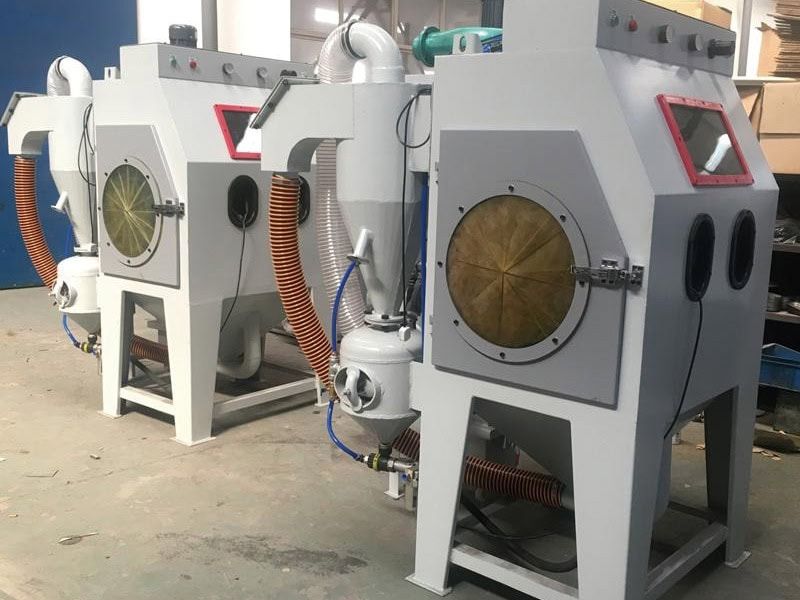
Space-saving pressurized abrasive blaster with dual pass-through doors. Ideal for high-efficiency surface preparation of long pipes and automotive components.
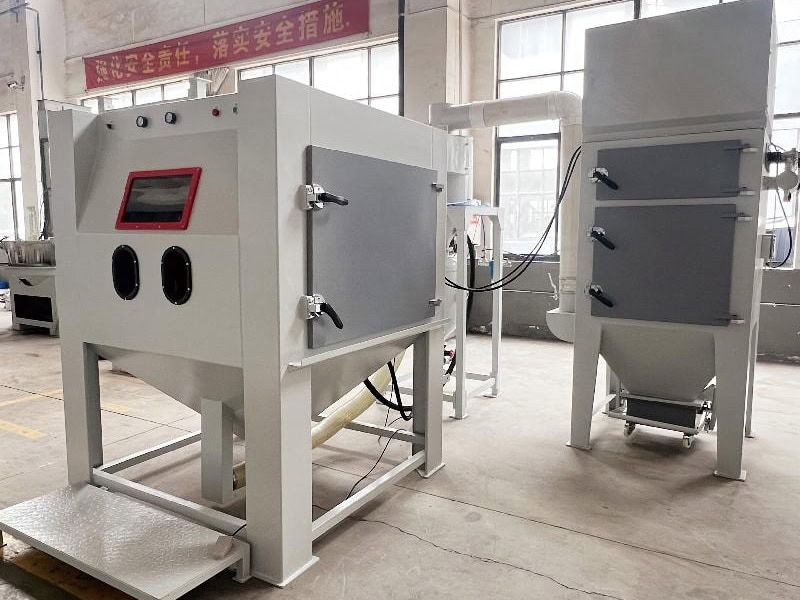
Spacious high-velocity pressure blaster. Features an extra-large interior chamber to easily accommodate and aggressively clean bulky industrial components.
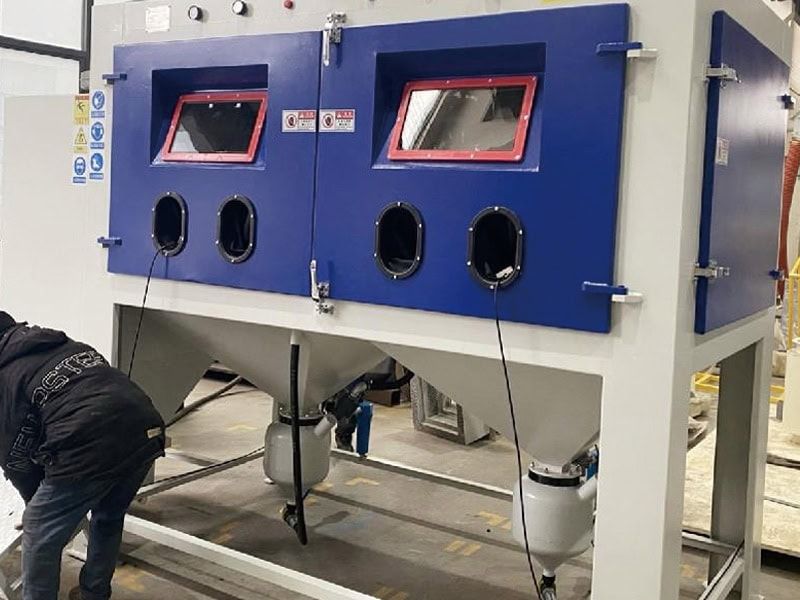
High-velocity multi-station pressure system. Empowers multiple operators to perform aggressive coating removal on massive industrial components simultaneously.
Purpose-built automatic blasting systems for mold cleaning and heavy workpiece processing. Equipped with load-bearing rotary tables and programmable blasting paths, suitable for tire molds, die casting molds and large castings.
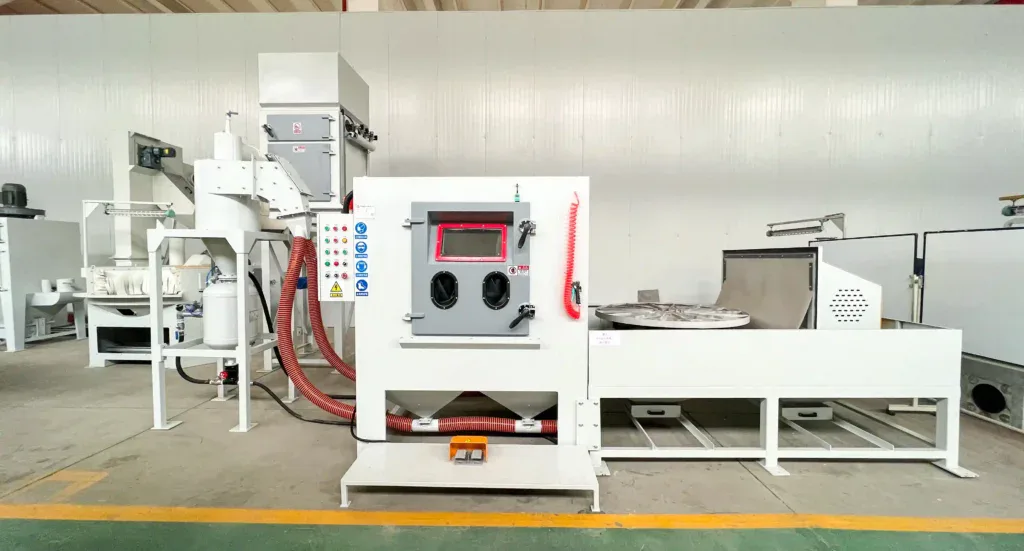
Automated tire mold blasting system featuring a 1.5-ton rotary table. Delivers precision cleaning without damaging critical mold surfaces.
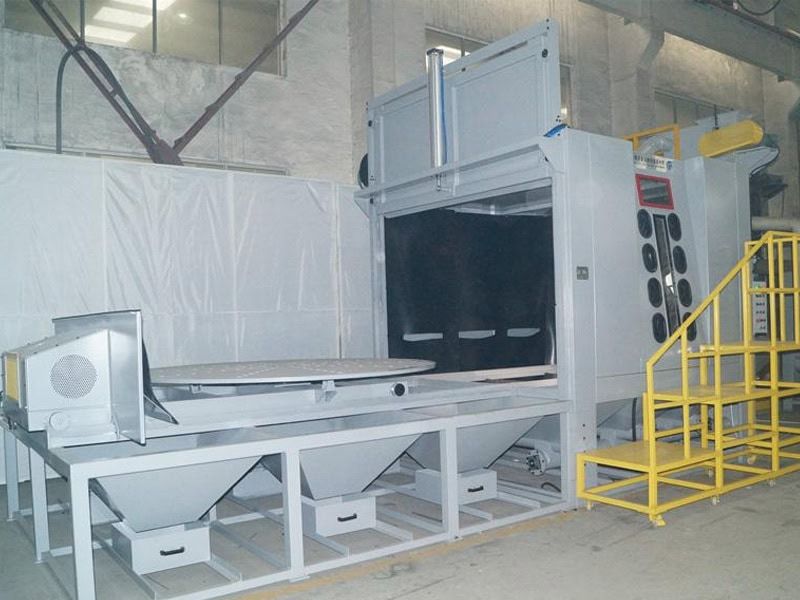
An advanced automatic blasting system featuring an electronic loading table. Delivers high-efficiency surface preparation for heavy molds and castings.
Contact us today for more information or a personalized quote, and experience the power of our manual sandblasting solutions.
| Comparison Item | Suction (Siphon) Blasting Cabinet | Pressure Blasting Cabinet |
|---|---|---|
| Blasting Principle | Negative pressure siphon, draws abrasive into airflow | Direct pressurized tank, pushes abrasive at high speed |
| Blasting Intensity | Moderate, gentle and controllable | Strong, aggressive and high-impact |
| Air Compressor Requirement | Low, 0.8–1.2m³/min at 6bar per nozzle | High, 1.5–3m³/min at 7–8bar per nozzle |
| Typical Applications | Mold cleaning, deburring, precision finishing, light rust removal | Heavy rust removal, thick paint stripping, large scale descaling |
| Operating Cost | Lower abrasive consumption, lower energy cost | Higher abrasive and energy consumption |
| Best For | Small-medium batches, precision workpieces, workshops with limited air supply | High-volume production, heavy workpieces, aggressive cleaning needs |
Your largest workpiece determines the minimum chamber size. As a rule of thumb, choose a cabinet with an internal chamber at least 200mm wider and 150mm taller than your biggest part, to leave enough space for gun movement and optimal blasting angles. Also consider the weight capacity for heavy molds or castings.
Match the cabinet to your existing air compressor. Suction cabinets work well with lower CFM (airflow) and are suitable for most small workshops. Pressure cabinets require much higher CFM and PSI to maintain consistent stripping speed. Always confirm nozzle size and air consumption before purchase.
A reliable dust collection system is mandatory for operator safety and environmental compliance. Look for integrated cyclone separators and bag filter systems that capture fine dust and extend abrasive life. For closed workshops, ensure the system meets local dust emission standards.
Different blasting media deliver different surface finishes. Glass beads create a smooth matte finish; aluminum oxide provides aggressive cutting and rust removal; silicon carbide is for hard alloys. Make sure the cabinet supports the media you plan to use, and has an effective separation system for fine abrasives.
For low-volume, mixed-part work, a standard manual cabinet is most cost-effective. For mass production of small parts, consider a tumble blast accessory. For large, heavy workpieces like molds, a turntable model will greatly improve efficiency.
Precision cleaning of injection, die-cast and tire molds without damaging cavity accuracy.
Learn More →Deburring and uniform finishing of screws, nuts, washers and small metal components.
Learn More →Rust removal and surface preparation for chassis parts, brakes, engine and body components.
Learn More →Matte finishing of aluminum frames, heat sinks, shielding cans and precision parts.
Learn More →Desanding and descaling of iron, aluminum and zinc castings with consistent surface quality.
Learn More →Cleaning of valve bodies, pump parts, impellers and hydraulic fittings before assembly.
Learn More →Suction cabinets use negative pressure to draw abrasive, requiring less air and delivering gentle, precise blasting. Pressure cabinets use a pressurized tank for high-impact, fast cleaning, requiring more compressed air.
Choose a chamber at least 200mm wider and 150mm taller than your largest workpiece, to ensure comfortable gun movement and proper blasting angles.
A standard suction cabinet with one Φ8mm nozzle needs about 0.8–1.2m³/min at 6bar. A pressure cabinet with the same nozzle requires 1.5–3m³/min at 7–8bar.
Yes, but you need to thoroughly clean the system when switching media to avoid surface finish inconsistency. Fine glass beads and coarse aluminum oxide should not be mixed.
Most industrial cabinets come with an integrated dust collector. For heavy, continuous use or strict environmental requirements, an external high-efficiency dust collection system is recommended.
Pressure blast cabinets easily remove thick paint and heavy rust. Suction cabinets work well for light rust, scale and surface finishing, but are less efficient for thick coatings.
Send us your workpiece details, material and processing requirements. Our engineering team will recommend the most suitable sandblasting solution and provide a free quote within 24 hours.
Get Free Recommendation & Quote